
One thing first. Questing covers founders, operators, and executives across every sector. If you know someone with a story worth telling.
Ask Victor Fatanmi what he does and you’ll get a list. Brand strategist. Designer. Startup founder. CEO. Cultural architect. The one title he won’t volunteer is the one he was born into. He’s a prince.
His father is a traditional ruler in a state in South-western Nigeria. Small community, not a large kingdom, and Victor is careful to say so. He’s also not the next in line; his elder brother is.
But he grew up watching a man hold real authority and refuse to exploit it. His father walked the streets. He joked with his subjects. He led with warmth instead of distance. That was Victor’s first picture of what power looks like when it’s working, and he absorbed it before he had a word for it.
A few years down the line. As he progressed through school, entered the workforce, and eventually decided to start a company and learned that watching isn’t the same as doing.
FourthCanvas is the brand strategy and design firm he’s co-led since 2015. His clients include PiggyVest (Nigeria’s largest savings platform), ALX (the pan-African tech talent accelerator), Ventures Platform (one of Africa’s most active early-stage funds), and The Stack Group, parent company of Paystack.
A few years in, one of his founding employees that had left gave him a piece of feedback he still can’t shake. He told Victor he was domineering. So decisive, so sure, that people found it hard to speak around him. Victor had been leading with intention from day one. He’d just been wrong about what his intention produced.
“The biggest threat to a leader,” he says, “is the immunity that comes from intentionality. You have the desire to do it well. And because you mean well, you assume you’re doing it well. But even while you think you’re doing it well, there’s a lot you’re not doing right.”
A lot of founders will tell you they’ve made mistakes. Fewer will tell you which ones.
Victor has done both and then built a system out of what he learned: the four pillars he calls Trust, Clarity, Voice, and Commitment. He’s developing a diagnostic tool to help other companies measure where they stand on each. And his team has just published what they call the Code of Care, a document that ties FourthCanvas’s values to the specific behaviors they’re supposed to produce.
Editor’s Note: The conversation below is edited for length and clarity.
Your thinking on culture seems to predate Fourth Canvas. Where did it actually come from?
A mix. Red Media Africa was the first major place I really worked, as a contractor, mostly remote. I had different experiences with different team leads there. I picked up so much by just observing how different people led and the impact it had. Some led with care, and I was more excited to work for them. Some led with pressure, almost fear. That gets the work done in the short term. But it doesn’t last, because you’re not genuinely engaged. I learnt so much from the CEO Chude Jideonwo’s intentionality with feedback, and so many other things.
Earlier in uni, before I dropped out, I was also part of a Christian missionary group, the students union executive cabinet and a few other small teams. I paid close attention everywhere I was. And I read a lot. Like a Virgin by Richard Branson, Delivering Happiness, the Zappos story. The 8th Habit by Stephen Covey. Books about companies with strong cultures. I read them with my co-founder (Bolaji), when we were starting FourthCanvas and we’d discuss them as we shaped what we wanted to be.

The books were all foreign. Did you ever doubt the model would translate?
I was stubborn with the idea that this thing can be real here. Over time, I learned why it’s harder. Societal culture bleeds into corporate culture. The life an employee has already lived, in their family, on campus, in society, that’s what they bring to work. You’re not starting from zero when you employ someone. You’re working against two decades of conditioning. Every society has its own coloring, its own search box already waiting for you.
And then there’s scarcity. When resources are tight, the room for experiment shrinks. Take Netflix, where employees are trusted to make big spending calls. When someone makes a decision that costs the company real money here, the wound is deeper. The company might not survive that one error. So you have less patience for mistakes, which means less freedom for people. I gradually understood why some of what I read felt idealist for that reason. Not realistic here.
But I was stubborn anyway. Maybe delusional, because I didn’t have enough experience to know why it wouldn’t work. There’s an advantage in being a nobody; I was just a boy from Akure. You don’t know that it won’t work. So you go ahead and do it.

All these led to this framework: Trust, Clarity, Voice, Commitment. Is that order chronological, or by importance?
Both, at the same time. You could make a case that clarity comes first, because on day one, this is why I went to incorporate, this is what we’re trying to do here. That’s the beginning of the journey. But trust is the thing everything else rests back on. It’s needed at the very start, and it keeps being the fabric. So the order works two ways. Trust is number one either way.
Let’s start with trust, then.
Trust is the foundation of everything. Collaboration, supporting your colleagues, expressing yourself, doing more than you were sent to do. All of it sits on trust.
When trust is absent, people spend enormous effort protecting themselves. You have a good idea before a meeting. You could spend those ten minutes making the idea stronger. Instead you spend eight of them figuring out how to say it so nobody uses it against you. That’s wasted resource.
People also fill silence with fear. Someone leaves suddenly, nobody explains why, and now everyone is asking, am I next? Is the company in trouble? Nobody had the conversation, so everybody invents one.
One way we build trust is through bonding that isn’t just play. We create conversations where people actually learn about one another’s lives, not just the job. You’ve been to his house. You’ve seen his kids. You know he runs football on weekends. That’s a different kind of colleague than the one you only ever see in a meeting.
You also said nice offices matter. How does that square with trust being the foundation?
Nice offices matter. Good equipment, HR benefits, all of it matters, because they’re signals that the company cares. But they’re not the foundation.
So it’s not that perks are wrong. It’s that they can’t do the work culture hasn’t done.
Exactly. When trust is absent, the perks feel empty. I read a story about employees at an offsite, sitting in a jacuzzi the company paid for, and what were they doing? Complaining about how terrible management is. Plotting how to leave. You give people the perk, and they use the comfort to lament their way out. It’s like a parent who never gives a child time but keeps buying toys. The toys are good. Eventually, the toys feel empty.
Then clarity.
In many organizations, things just happen. People don’t know where they’re headed or why they do what they do. They’re just told what to work on next.
Clarity changes the work itself. When you can see how your one tiny piece connects to the whole puzzle, it’s easier to put your heart into it. The press release you’ve been writing since morning is easier to care about when you know why it matters and how it moves the needle.
Clarity also means being unambiguous about what you stand for. Say kindness matters here, and then your top engineer insults someone on a call or makes a sexually abusive joke, and you let it go. Now there’s ambiguity. The values are on the wall, but people watched you ignore them. They no longer know what’s real. When you step in and say, that’s not acceptable here, that’s what we agreed, you reinforce the clarity. You remind everyone what actually matters.
Voice.
Voice means people can speak their minds. Even when the opinion differs from the boss. Even when it differs from everyone else in the room.
It’s hard to fake. Sit in a meeting and you can feel it. “Any thoughts?” “No, I’m good.” “I agree with what she said”, everyone choruses. “Next steps, let’s go.” Nobody disagrees, but you can tell they’re not fully in either.
The irony is that leaders have the most freedom of voice, so they stop noticing when others have none. You think you’re more experienced, so you push your view. Even when you’re right, it’s better to let people speak first, then explain why you’re going a different way. If I dismiss your idea in front of the room on day one, you’ve learned your lesson. Next meeting, when I ask what you think, you’ll say whatever you think I want.
When someone speaks up and they’re right, I name it. I’ll say, I’m glad Mercy said that. If she hadn’t, we’d have missed it. Now, Mercy is happy she spoke. The people who agreed with her feel recognized. And tomorrow’s new joiner watches all of it and learns that speaking up is safe here.
Voice sits on trust and clarity. You speak up if you feel safe, and you have something worth saying if you understand what the company is trying to do.
And commitment.
Commitment brings everything together. People put their hearts into the work. They support their teammates. They hold each other accountable across departments.
That’s where silos break. I can work in marketing, but hold the product lead accountable, “You said two weeks, what’s the progress?” Without it being political. They don’t think I’m attacking them, because they know I care about the same outcome they do. I might even sit on their call, not because it’s my job, but to see what I can support.
If trust is low, that same question feels like an attack. If clarity is absent, there’s no shared goal to pull toward. Commitment is what you get when the other three are working. It’s very unlikely you’re doing badly on trust, clarity, and voice and still somehow scoring high on commitment. It doesn’t happen.
Which of these principles is hardest for you personally, and what’s hardest out there? Why the split?
For me, the hardest is voice. Out there, across most organizations I see, it’s trust.
For me, trust and clarity come easy. I’m a people person. I go to my employees’ houses, I play ball with them, I’m vulnerable with my team. They know my story. I make my mistakes in front of them. And clarity comes easy because I’m a strategist and a talker, so the conversations about why we do what we do happen over and over.
Voice is where I have to work. Because I talk a lot, I have to put real effort into being short and listening. And because I’m an ideas person, I have to put effort into accepting that my idea can be wrong.

You said you have to abandon your romance with your own idea. That’s a strong phrase.
That’s what it is. An idea looks so beautiful in my head, and I’m already fond of it, already attached to its execution. Then someone else speaks and starts pulling it apart. I have to put in the effort to let go of my romance with it and actually embrace what they’re tearing into. I think I do well at it. But I stay cautious, because I know it’s my weak point.
And why is trust the hard one for everyone else?
People are very protective. They won’t admit they make mistakes. They won’t admit they’re wrong. They won’t share the parts of themselves they’re not proud of. And that’s exactly where trust is built. Think about anyone you trust in your life, your sister, your mother. You trust them because you know their wins and their losses. Trust comes from knowing the lows. If you only know someone’s highs, what you have is fear or respect, not trust.
I think it comes from how power works in our society. We watch politicians, police, big men on the street use power to shut everyone else down. So that’s what we learn power is for. People bring that to work. What should be competition, a war of speed and innovation against your actual competitors, turns into a war inside the building. People fight colleagues, protect their egos, worry about who’s plotting against them. All the team bonding in the world feels artificial when that’s the foundation.
My advantage is that I grew up watching the opposite. My father had supreme authority and used none of it to create fear. He was jovial, simple, on the street with everyone. That was my first picture of leadership. So trust was the easy part for me to bring to work. I had to learn that for most leaders, it’s the hardest.
What’s the one thing companies do or have that has zero effect on actual culture?
Empty values on the wall. For two reasons, mostly.
The first is the generic, cliche nature of those values. Integrity. Honesty. Excellence. Customer service. Nobody reads them. Nobody understands how they apply to this specific organization. People have seen those same words at petrol stations and supermarkets where the receptionist was insulting them. The words mean nothing because nobody thought them through. Core values are a good idea. Most core values are done in a way that’s useless.
The second is values that only speak to performance. Speed, efficiency, innovation. Every one of them is about doing the work faster, nothing about how people treat each other. But the end does not justify the means. If someone hits their target by stepping on teammates, vendors, investors, that approach will damage the organization eventually. You can’t run a place where it’s targets, targets, and no questions about how they were met. You’ll lose people, and the company will go under.
Hmmm.
One more thing: Try to avoid using words like Innovation. Integrity. The popular words. Replace them. Don’t say innovation, find your own word for what you actually mean. Don’t say Integrity, say straightforwardness, or whatever it is for you. It can even be short phrases. Keep them simple but make them stand out. This way people actually remember the 3-5 values you have, because it isn’t the same word everybody else has on the wall.
You said three to five values, not ten. Why?
Because if you pack ten, they don’t feel important anymore. Core means primary. Core means central. You can’t have ten central things. It’s like priority. If everything is urgent, nothing is urgent. If everything is a priority, nothing is. So for me it’s three to five, the priority values. The things you will not be okay compromising on. Everybody should be honest, everybody should be kind, those are general values of life. Core values are the few you’ve chosen to hold to a higher standard than everything else. That’s just my personal opinion, however. Zappos, where I got introduced to core values actually had ten. So, there are many ways to look at it.
So what does the non-empty version look like?
At FourthCanvas, the values are Lead, Care, and Stretch. Short, real words. But also with longer versions: Lead with care, Care with intention, and Stretch because you care. Care is at the centre. Each one also has an explanation and behavioral examples. For example, Stretch breaks down further to three dimensions. Stretch your mind, which is active learning. Stretch your ideas, which is taking good work further instead of getting excited too early. Stretch your commitment, which is giving the extra hours when they’re needed. Each sub-value has a specific behavior attached. That’s the work. You put in the effort to arrive at the values, then you put in the effort to break them down. The more effort you put in, the less likely you are to land on the same generic words everyone else uses. Also, we didn’t get there in one day. It’s months and years and intentional effort to improve the clarity on these things, till we are in a place where we have a document as comprehensive as the Code of Care.
The values also have to reflect the leader. Steve Jobs founded a company whose values aligned with his. Doesn’t mean you copy and paste yourself onto the wall, and some values can be ones the leader is still working toward. But on a day-to-day basis, the founder is the ambassador of those values. If you privately think it’s fine to bend the truth sometimes, don’t put honesty as a core value. You’ll be the first one breaking it.
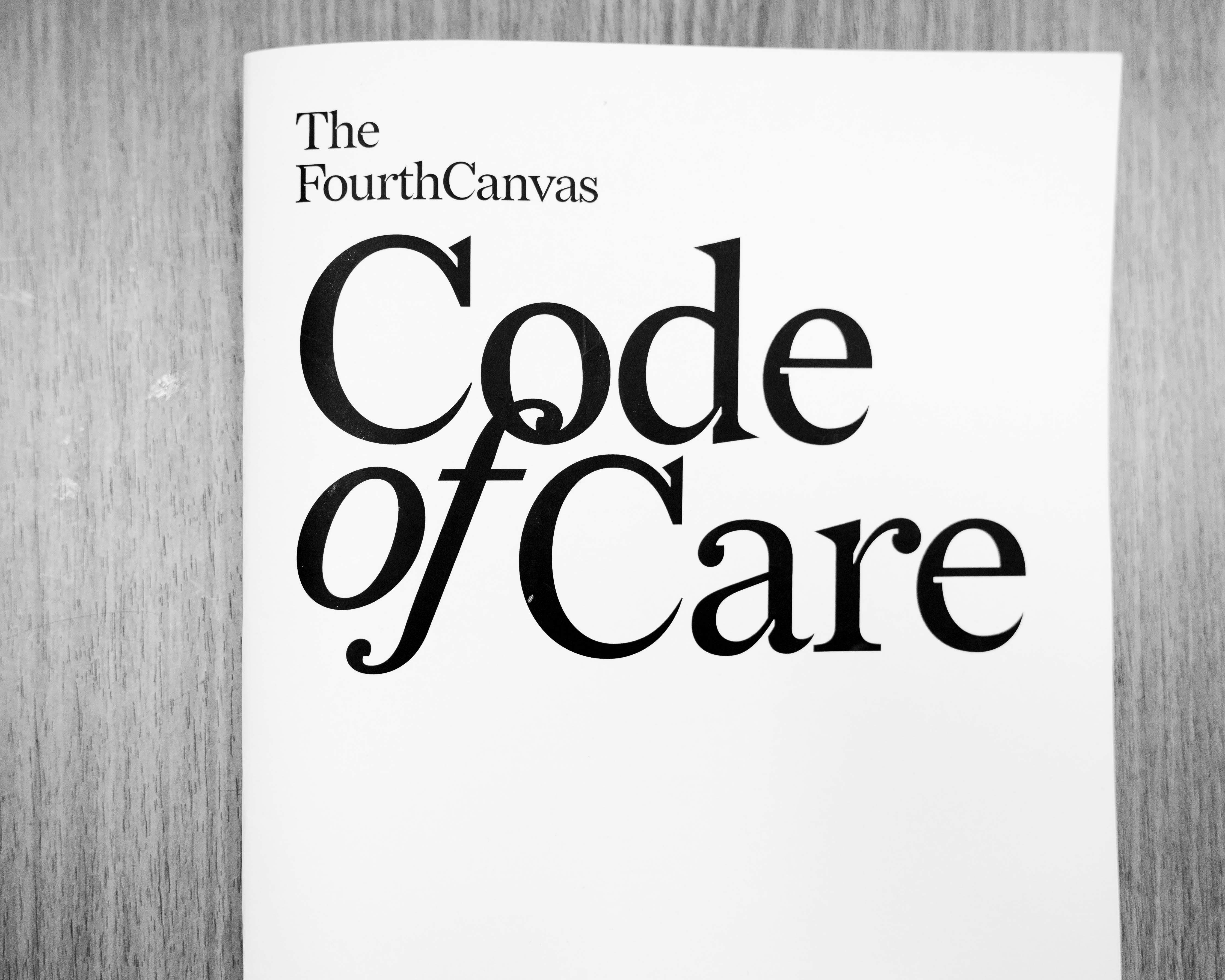
Where does the Code of Care fit?
That’s what we just published. Years ago, we saw Google’s code of conduct and were struck by how deliberately it laid out specific behaviors. Don’t discriminate, no sexual harassment, and so on. Later, our Head of People Ops was working on our own employee code of conduct. It began with the core values, and then clear guidelines neatly organized under important sections like ‘conflict of interest’, ‘confidentiality’ and so on. So I thought, what if we organized all of these in direct correlation to our core values? If you care, you wouldn’t do these things anyway. So instead of a typical HR document for onboarding, the Code of Care opens with why we’re here, then takes each core value and ties specific behaviors to it. The name plays on “code of conduct.” Now we’re happy to release it openly so that hopefully, it can inspire other teams to more clarity and intentionality with their cultures
HR operationalizes the culture. But the CEO is the walking example and ambassador. A lot of people are looking for that. So I’m trying to be a voice for leading the culture as the CEO. If the leader doesn’t embody the values, everything else is decoration.
Photo credits: Olamide Fawole, for FourthCanvas
If Victor’s story reminds you of someone, in any field, any function, anywhere on the continent…