
Kelechi Nwaozuzu still remembers the pressure vividly. Not the loud, external kind but the quiet, internal weight of being trusted with something that mattered.
When she took on the responsibility of running Café One, it wasn’t with a grand manifesto or a disruptive playbook. It was with a simple, almost stubborn resolve: it would not fail on her watch.
“I stood in front of my team and said, “It will not be said that when we review the report, the business made a loss, and it was my name on it.”
That sentence captures much of how Nwaozuzu operates. Direct. Grounded. Intolerant of excuses. And deeply committed to building things that last.
Today, she leads Café One, Nigeria’s largest hybrid coffee and coworking space.
In this conversation, Kelechi Nwaozuzu reflects on what it really takes to build a lasting hospitality brand in a market that often rewards noise over substance. We talk about resisting the urge to overcomplicate, learning directly from customers, and why operational discipline matters more than clever ideas.
You studied Computer Science but ended up on the business side. How did that shift happen?
Even while studying Computer Science, I knew I wasn’t going to be a developer. Writing code didn’t interest me. I was more drawn to the business side.
After NYSC in 2017, I joined Union Bank and asked myself a simple question: What do I actually enjoy doing? The answers weren’t technical; they were things like organising events, managing people, talking, and writing. That led me to Corporate Communications, where I worked on the digital desk, writing articles, managing the website, and handling social media.
Over time, I realised I needed stronger business fundamentals, so I left to do my MBA in 2019. About nine months after my MBA in 2021, I joined Sterling Bank through the Management Development Programme, rotating across teams for 18 months.
During a rotation with the Data Team, I was asked to apply data to a business. I chose Café One. I approached it like a mystery shopper and asked, If I were running this business, how would data help me make better decisions? I submitted my findings. Months later, in the most unexpected turn of events, I joined the Cafe One team in 2023. I wasn’t an expert in hospitality or real estate, but I had a plan.
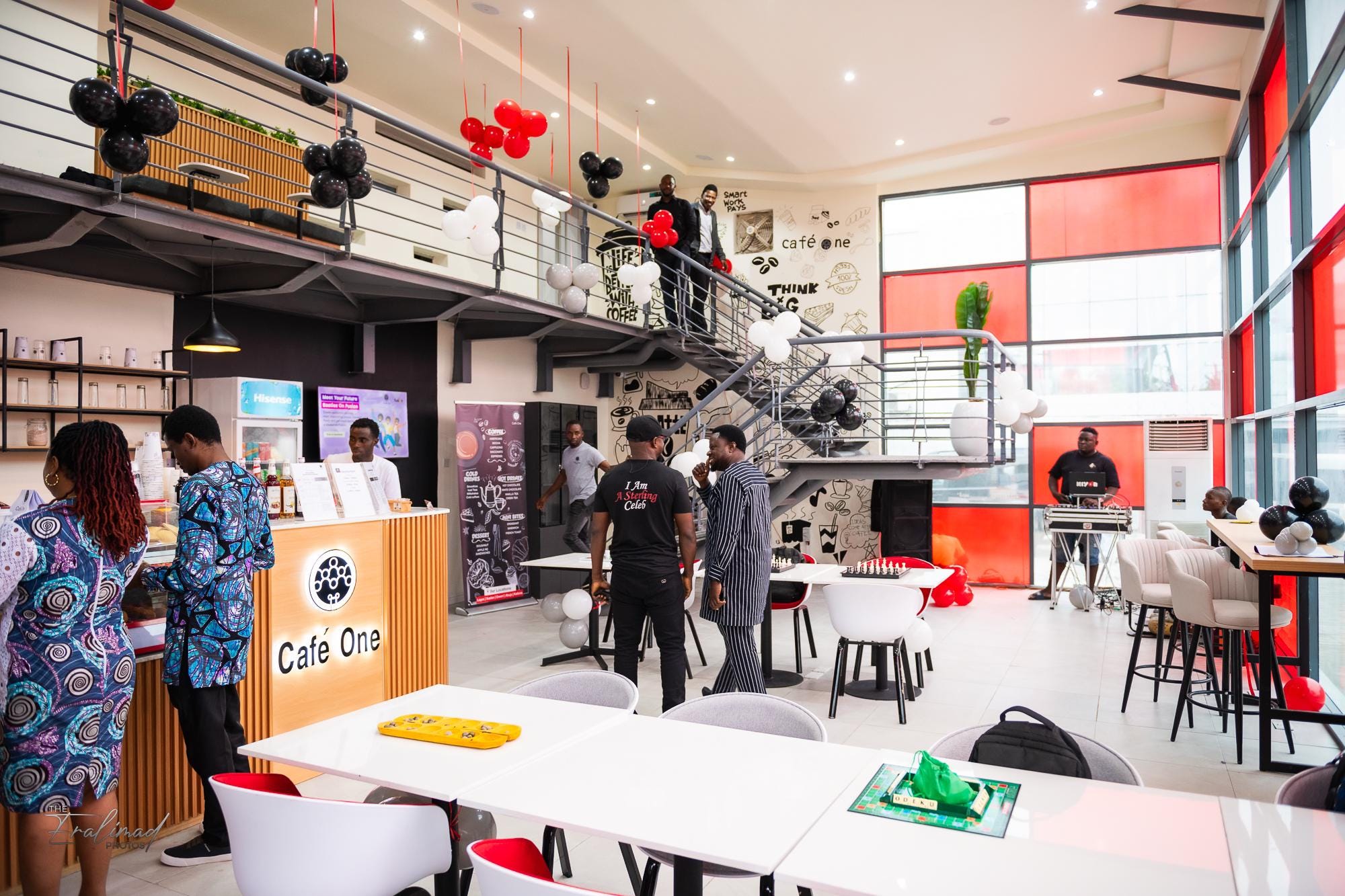
Cafe One Victoria Island, Lagos
What were the early days like when you took over Café One?
I was hungry. Fresh out of business school, at a crossroads in my career, and trying to prove—to myself—that I could do this.
In the first year, we didn’t do anything fancy. We focused on the basics:
Cost Optimisation. We looked at every line item. Where was money going? Were we overpaying for procurement? We tried to ruthlessly drive down operational costs.
Revenue Diversification. We were a co-working space, but we weren’t maximising the asset. We introduced new revenue lines and optimised the pricing on existing co-working services.
Brand Awareness via Digital Channels. We had a fantastic product that nobody knew about. Since I had digital/brand marketing experience, I took this personally. For a long period in 2023, there wasn’t a single caption on our social media that I didn’t write or vet personally. We went heavy on digital channels because that’s where our customers were.
That first year, we roughly tripled our revenue. That validated the business case. In the second year, we expanded and opened about 10-11 new locations.
How did technology support that growth?
We didn’t wait for a perfect app. We started with a simple “self-service link”—basically a web form—so we could start capturing customer data immediately. We ran with that imperfect solution for a long time until we eventually launched the Cafe One App. It taught me that you don’t need the perfect tech stack to start gathering the data you need to grow.
You were given a lot of autonomy. How did you handle the pressure?
Most of the pressure was internal. I felt honoured to be trusted with the opportunity, so I was determined to make it work.
There were nights I’d wake up at 2 a.m. with ideas and message the team—though they knew not to reply until morning.
You went from managing a small team to managing nearly 200 people across multiple locations. How do you maintain standards without micromanaging?
My approach to work is such that I don’t micromanage; I share the vision and let people decide how they want to arrive at the destination.
If our collective goal is to get from London to Lagos, I don’t care if you fly Kenya Airways with a layover or take a direct flight. I don’t care if you prefer the window seat. What I care about is that we arrive at the destination on time and efficiently.
My leadership style is about selling the vision (the destination) and then letting the team own the execution (the route). I don’t care if you fly direct or go via Kenya Airways. If I have to tell you every step to take, then I haven’t hired the right person.
How did you think about hiring and team building?
In the beginning, I had one-on-one chats with every single employee—about 40 to 60 people. It was exhausting, but it was necessary. I take the same approach to hiring, where I sit in on the interviews for all new hires. I used to do this, but now I only sit in on only some key/sensitive roles
I’ve learned that if you hire the right people upfront, you save yourself 80% of the headache later.
Today, we’re close to 200 staff. We invest heavily in them. We have a partnership with a university where some staff work while earning their degrees. When they graduate, they can move into other functions within the business.
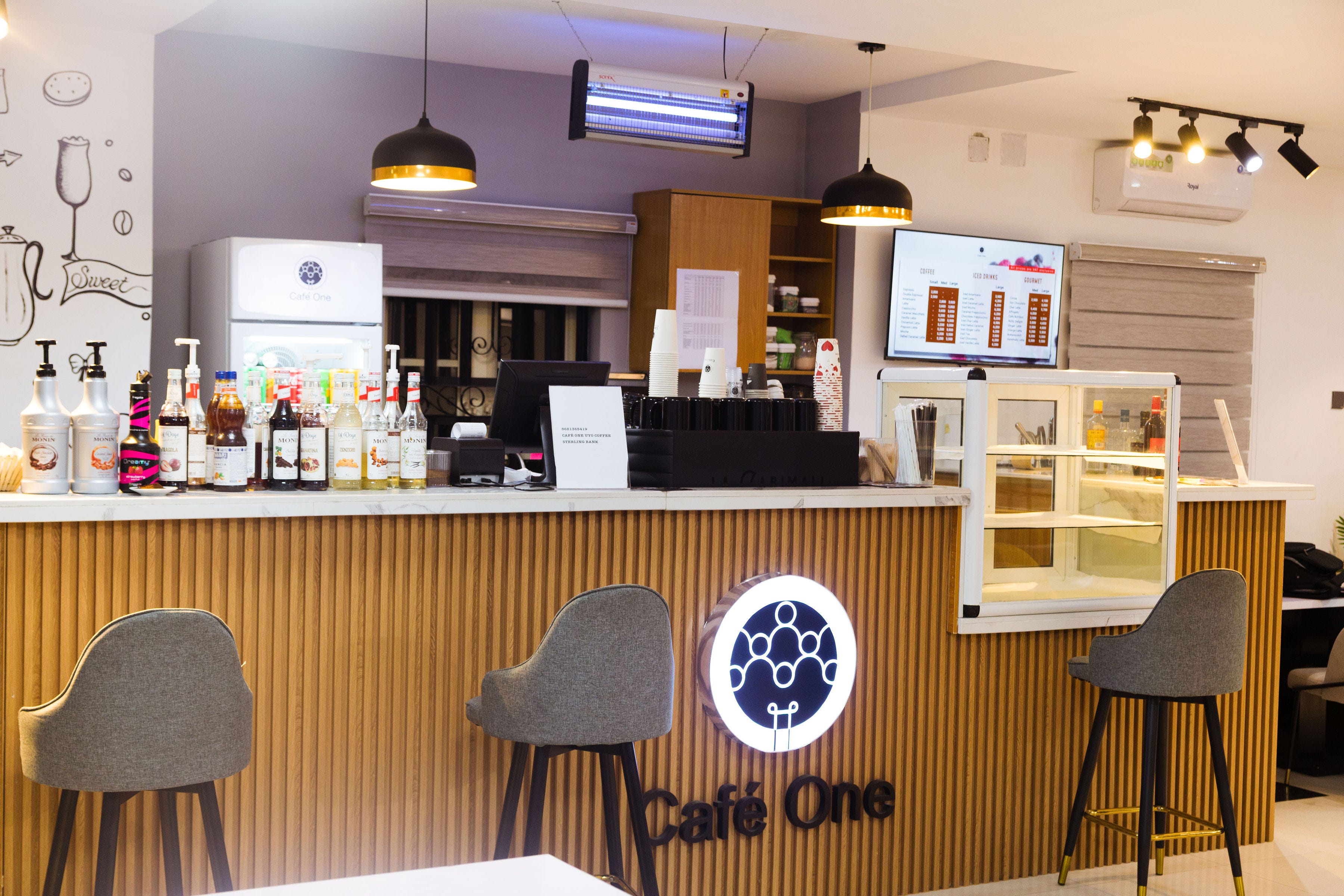
Cafe One, Uyo, Akwa Ibom
You place a strong emphasis on learning. How does that show up in practice?
Every year, we have a reading list. Some books are function-specific—for example, product managers read Hooked and other Product Management-related books. Others are general business.
For a long time, “Pour Your Heart Into It” (The Starbucks Book) was our reference point. That and The E-Myth Revisited—which I think every business owner should read and How to Win Friends and Influence People.
Beyond books, if someone wants to take a course, we try to support it. Continuous learning is non-negotiable.
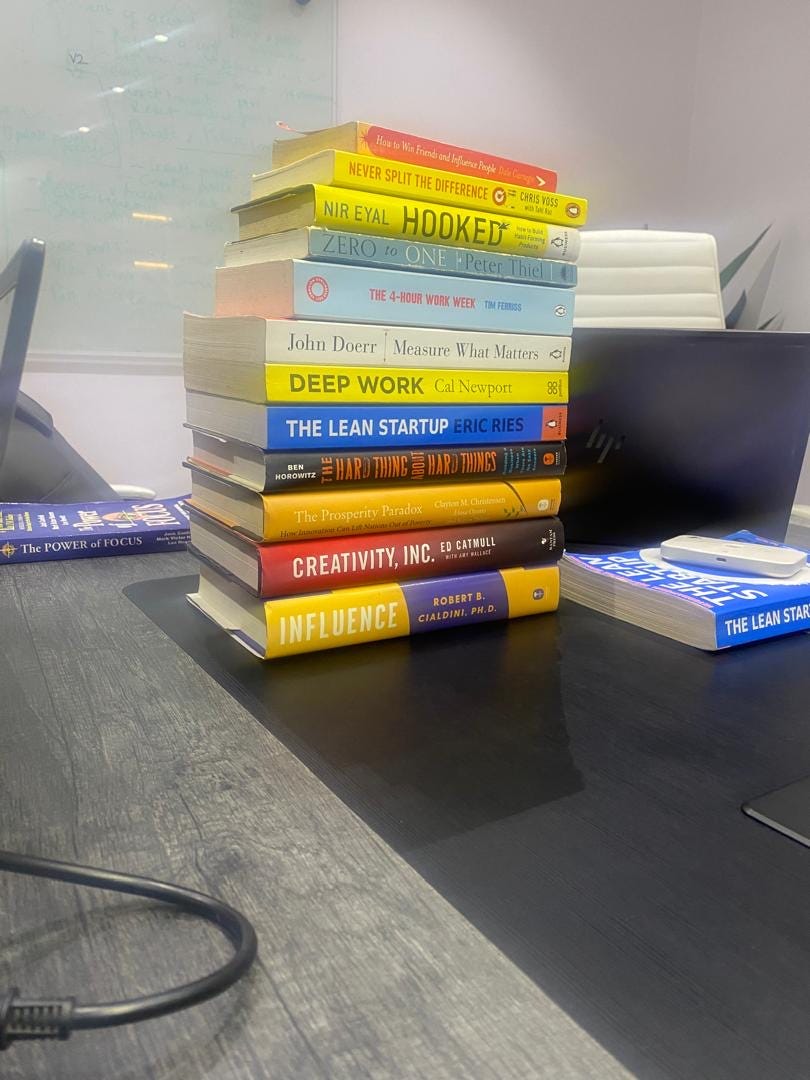
Some of the books Cafe One staff members are required to read | Credit: Kelechi Nwaozuzu
What’s a mistake that shaped how you operate today?
Yes. One major learning curve involved procurement.
We were trying to cut costs on a particular item—a major expense for us. I found a middleman who promised to bring them in from China at a significantly cheaper rate than our usual supplier.
I was so focused on the cost-saving and the speed that we didn’t do proper due diligence on her company. We didn’t sign a watertight contract. We just wanted to move fast.
The exchange rate shifted, she didn’t pay the supplier fully, and she eventually ghosted us. The supplier came after us, and we ended up paying more to fix the mess than we would have paid the original vendor.
The lesson was clear: never skip due diligence, and always have proper contracts—no matter how much you want to save or how fast you want to move.
It’s been 3 years since you started working on Café One. What is the endgame?
I want to build businesses that outlive me. I’ve never been primarily driven by money—I believe that if you build capacity and solve actual problems, the money always follows. Right now, I’m driven by the challenge of proving that these systems can work efficiently in Nigeria.
Rapid Fire 🔥
What business decision would you make again without hesitation?
I’ll choose operation efficiency and discipline over time every time. From day one, there’ll be standard operating procedures even if it weren’t a hospitality business. I’ll be intentional about customer experience. Customers feel valued.
What’s one thing people misunderstand about running a hospitality brand?
They think it’s all fun and games, but it’s actually not. It’s one of the operationally demanding businesses you can run. You’re managing people, power, and customer emotions. All that
It’s not a “soft” business. People think because we’re making money and declaring revenues, but in reality, the margins can actually be thin in the hospitality business.
That’s also why operational efficiency is important, because it’ll help you make more money.
What’s a lesson about leadership you only learned on the job?
Leadership is more about building a system than saving the day. If you’re an expert at putting out fires, that’s fine.
But if you’re always putting out fires, it means you’ve built dependence and not a strong team. Real leadership is about creating ownership and making yourself less central to general operations.
Empathy and high standards can live in the same room. You can be empathetic, care deeply about people and still insist on high standards. You don’t have to choose between being nice and effective. Things have improved since I started finding that balance.
“One thing about Nigerian women, we achieve”
this was so interesting to read. i love reading about the end-to-end processes of running a business in Nigeria, and women-run businesses are my best case studies. looking forward to more.