
In Kano, over 4,000 students showed up to a Boomplay campus event. The ticket wasn’t cash at the gate. It was a three-month subscription to the app, at a time when one month cost 500 naira. Every one of them paid.
“It was shocking,” Edidiong Ekong says. He was leading the marketing team that ran it.
Edidiong joined Boomplay when it had 8 million users and a target of 100 million across Africa in 2018. By 2021, when he left Boomplay, it had hit 98 million users with 60 million users from Nigeria, where he was in charge.
The obstacle wasn’t Spotify or Apple Music. Neither had seriously entered the market. The obstacle was that Nigerians didn’t pay for music at all. They downloaded it free from pirate sites, and the platform that tried before Boomplay, Spinlet, died trying.
What follows is how Boomplay pulled it off: scratch cards that worked around broken payments, exclusives that lured Spotify users onto the app, and a gamification flywheel that had students playing one song on repeat for two weeks. Edidiong went on to lead growth at Alerzo, Klasha, and Fireflies.ai, and recently published Velocity, Momentum, and Distribution. This conversation stays on Boomplay, where most of his instincts were formed.
It has been edited for clarity and length.
Let’s start before Boomplay. How did you even end up there?
I started an agency at the end of my first year in university. We did design, paid ads, and campaigns. We got contracts from the government and brands. There was this guy in my town, Nelson. In every city, there’s that person you look up to if you’re an artist trying to break a song. He said there were these guys coming in who needed help with their campus activation. It was Boomplay, still functioning as Tecno Player then. We ran the activation. After school, going into NYSC, there was an opportunity and I moved inside. I wanted a richer experience on the brand side than from an agency standpoint.
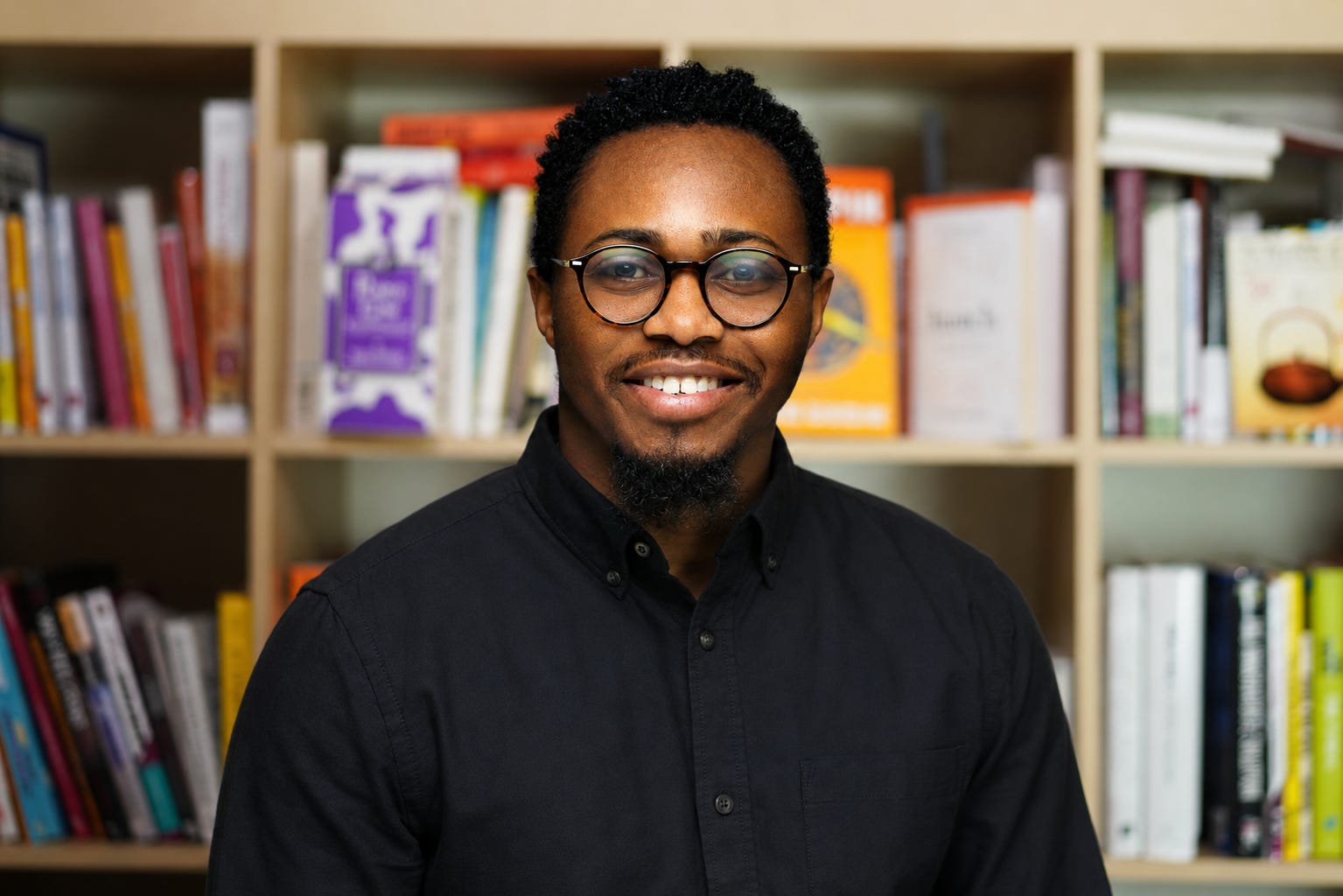
Edidiong Ekong
By the time you joined, Spotify and Apple Music already existed. What did the competition actually look like on the ground?
Mostly pirated music. Spotify was scared to move into the market. The cultural pattern of consuming music was the problem. People went to pirate sites and downloaded for free. You’re coming to replicate what you did in Scandinavia? It would not work.
Then payments. Finding dollars was hard. Finding a card that works was hard. Tidal tried to enter Nigeria through an MTN partnership, buying subscriptions via airtime. It failed woefully. Apple Music failed too. They all came back much later, when there was more maturity.
Boomplay’s work was education. Why use this app instead of the pirate site? Why download from sites you don’t trust, where the file can be a virus? And these artists are humans. They need to earn.
So how do you collect money in a market where cards don’t work?
We created the Boomcard. Like a gift card. It has a value, you scratch it, input it in the app, and it becomes a subscription. Then we built a network across universities and locations where people sold those Boomcards. Think POS agents. That was the format. And we supported Nigerian cards. That was the unlock.
Free was the bridge. Free came with ads and lower sound quality. If you love music, there’s a quality you expect on headphones. You wouldn’t get that on free. There was a time we were doing 1.5 million new users every month. Then 2 million. That ran for about two years. The floor was that 40% of everyone we brought in had to stay active.
I have to ask the obvious one. Boomplay shipped pre-installed on Tecno phones. From the outside, it looks like that explains everything.
Definitely, having the app pre-install helped, but it didn’t do all the work.
The real principle is this: before you even think about building a product, think about how you will distribute it, and build that into the product. Boomplay knew its strength was a network of devices. But having Techno Player didn’t stop you from installing Spotify. If pre-install alone worked, our numbers would have been ten times what they were.
What it did was cut the money we’d have spent on install ads. That freed budget for retention and lifecycle work. We also had reps in phone stores. Most buyers were first-time smartphone owners moving from Nokia. The rep sets up your phone, installs your apps, and one of them is Boomplay. Then we start nurturing you toward a subscription.
Once Spotify and the others finally arrived with deeper pockets, what did you have that they couldn’t just do?
Exclusivity. It was a bit expensive, but it worked. Say you’re an artist dropping globally on Friday. That music would be available on Boomplay only, from Wednesday. We’d pay an advance for that. Depending on the artiste and the terms, we paid roughly $20k minimum and above.
So the fans who had Spotify hear the song is out and it’s not there. You have to go to Boomplay first. And over time the perception builds: these guys always have exclusives, even against Spotify. Spotify had deeper pockets. But when they and Audiomack came in, that was a battle for them.
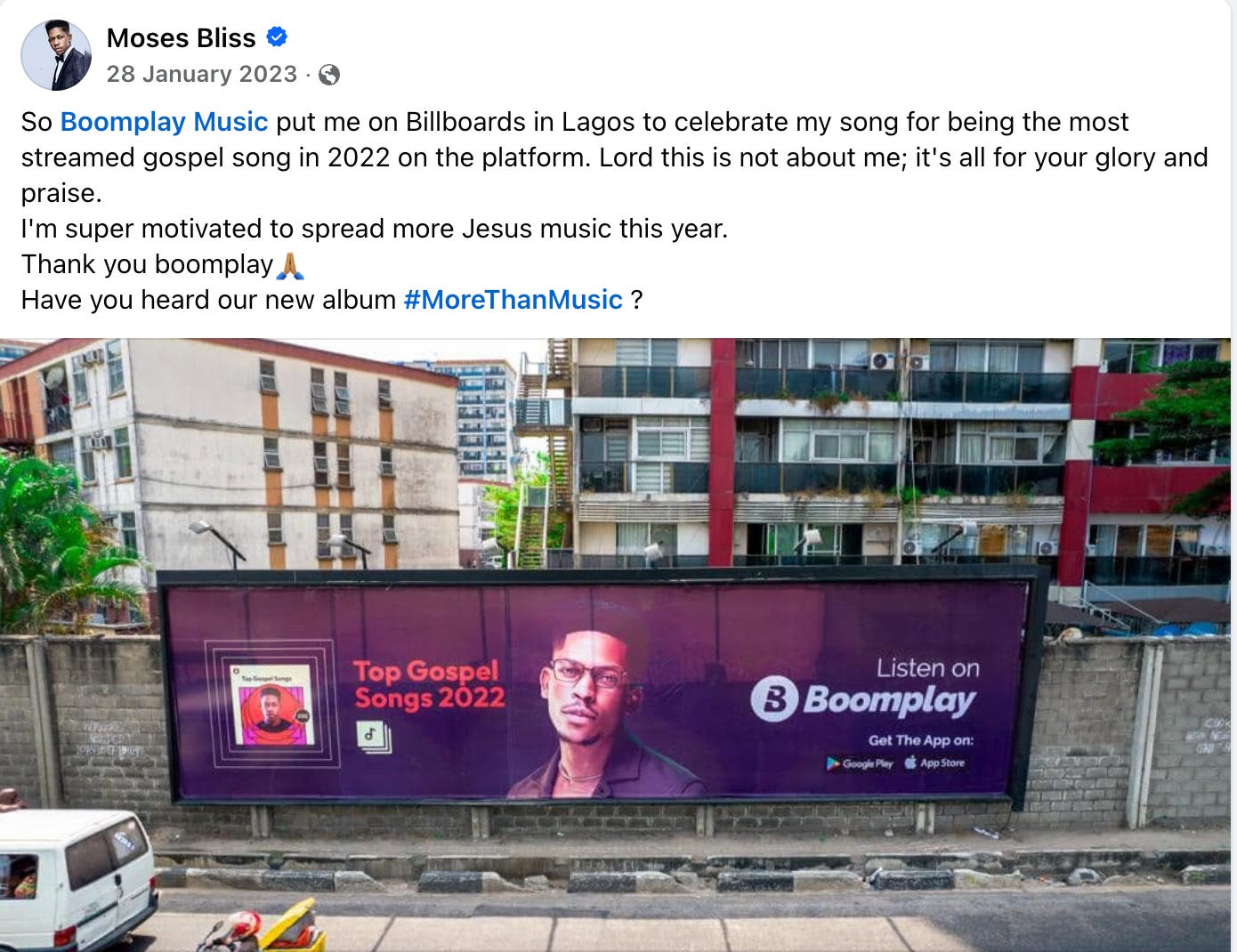
Credit: Moses Bliss on Facebook
You said the pre-install freed up your ad budget. So where did that money actually go? What were the ads saying?
The catalog. We weren’t advertising Boomplay, we were advertising that Wizkid’s music is available on Boomplay. They don’t care about us. They care about the idolo [idol].
We had the largest catalog of African music, and distributing on the foreign platforms was friction for artists. We opened Boomplay for Artists and had aggregators spread across the country, all the way north. If you couldn’t afford to put your song on Spotify, you got it on Boomplay for free. Your fans ask, where’s your music? It’s on Boomplay.
Then I created a launch checklist for every release. One item: the artist does a shout-out. “My music is out on Boomplay, go stream it.” They do it free, because they want fans listening. It engineered virality for us.
When we sponsored Big Brother Africa, we took it to TV. By then we’d expanded to Ghana, Kenya, Tanzania, Uganda, and we didn’t have separate teams in those markets. Every region had its own crazy requirements, and one team in Lagos managing all of it. So the question became: how do we create one campaign that’s inclusive of every region we operate in? The answer was to make the concept universal and the faces local. We weren’t going to claim we were better than Spotify head-to-head. What we had was the richest catalog and the best playlists. So the campaign was artists, speaking straight to camera, each market getting its own.
About 51 commercials featuring the likes of Tiwa Savage, Olamide, Fireboy, Sakordie, and Gyakie in Ghana. I liked Zlatan’s: “...Music is the reason why I’m dining with kings today. Continue streaming my music on Boomplay.” Imagine your favourite artist telling you that on television. You’ll want to check out Boomplay.
Boomplay’s positioning came out of the same thinking. We landed on the tagline, “Home of Music,” not Home of African Music, because we had ambitions to move into the UK at the time. That tagline is still in use today.
You’ve mentioned playlists a few times now. Everyone has playlists. Why did yours matter so much?
I’ll give you an example. There was this trend about a girl who left Lagos for Ibadan to meet a boy. In less than an hour, we created a playlist and called it Lagos to Ibadan. That’s how we infused ourselves into every conversation.
The trap with trends in the music industry is taking sides. If Davido and Wizkid are fighting, you can’t back one. You’ll be cast out. So we’d do a Davido vs Wizkid playlist instead. In the conversation, backing nobody. When we saw the spikes those playlists produced, we systemised it. We had a guy who was a library of music, he’d build a playlist in 10 minutes. Designers on standby for the cover. Thirty minutes max and it’s live, pushed as a notification while the argument is still happening on Twitter.
Spotify couldn’t do this. I know, because I spoke to their guys at some point after I’d left Nigeria. They wanted me to join them. But brands like that end up hiring someone who understands Nigerian music but is based in the US. That person will never be in touch with the realities in real time. They will only be reactive. Strong CV, but reactive.
Exclusives and playlists get people in the door. How did you keep them inside the app day to day?
Gamification. It was a Chinese-owned product, so we thought that way. Every time you listen, you earn coins. Coins convert to subscription discounts, or to tickets. We sponsored concerts, so a sponsorship might come with 50 to 100 tickets, and your coins could become a Davido concert ticket at a time when affording that was out of reach. People would die for it.
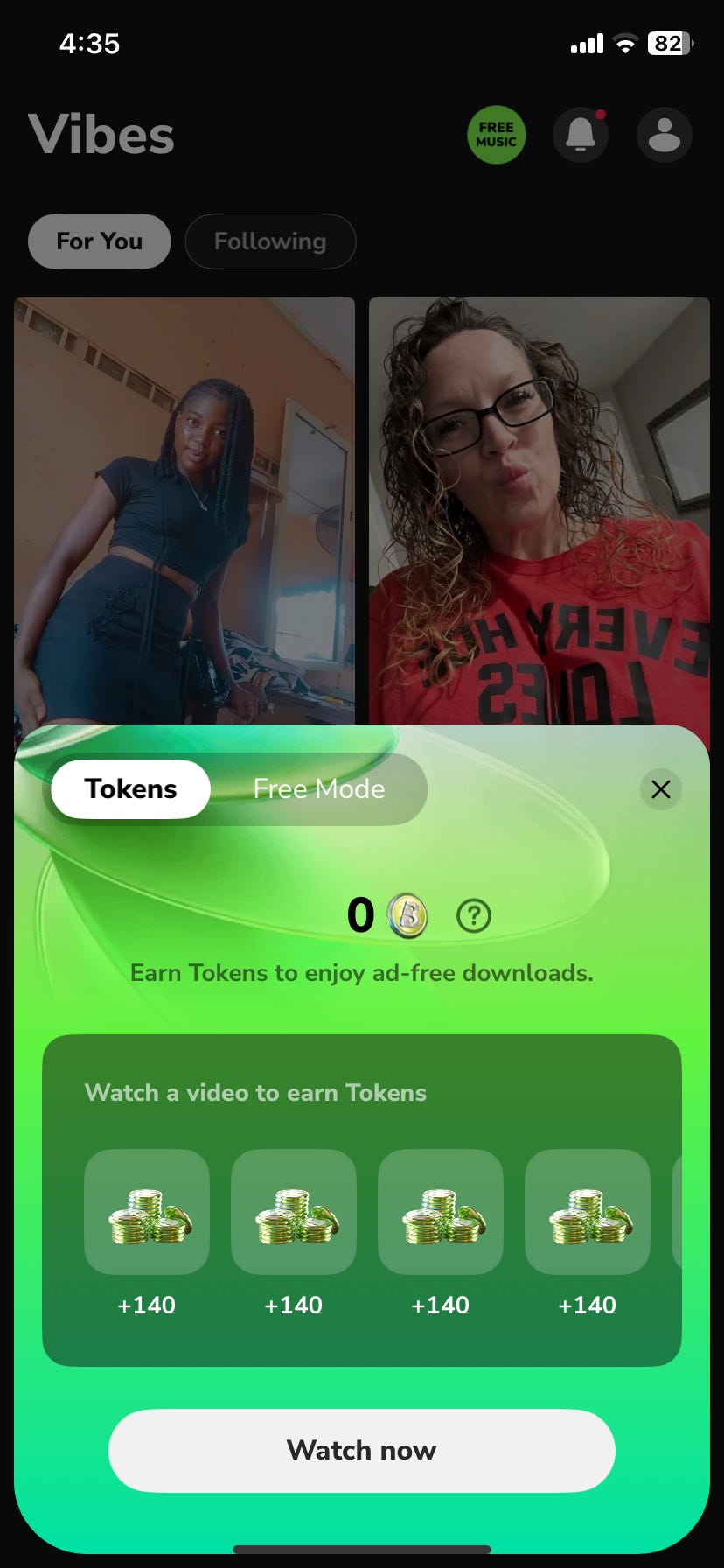
Gamification on the Boomplay App: Earn tokens from watching ad videos to enjoy ad-free music
Then stream parties. An artist drops an album, and whoever listens to the last song the most times in two weeks wins a phone. We had Transsion behind us, so phones were the prize. Everyone is chasing the same pot. My friends had songs on repeat and I’m asking, don’t you get bored?
There was also a community program. We paid creators to keep the conversation going on the platform. Post about the latest music, keep people talking, with a monthly ranking and rewards for whoever was top. That’s what later evolved into the live streaming and the social layer you see on the app now.
There was also a feature called CrossFade. Going to a party without a DJ? Don’t bother about a DJ. Create your playlist, connect to Bluetooth, drop the phone. It transitions song to song on its own. You’d go to parties and hear people say, we’re using Boomplay. We had it before Spotify did.
Then we noticed users creating their own playlists, so we put a prize on the playlist with the most listens. Now people are distributing their playlists to all their friends. Then the artists came on: verified profiles, their own playlists, live Q&As with fans. First, we made the playlists ourselves. By the end, the users and the artists were making them for us.
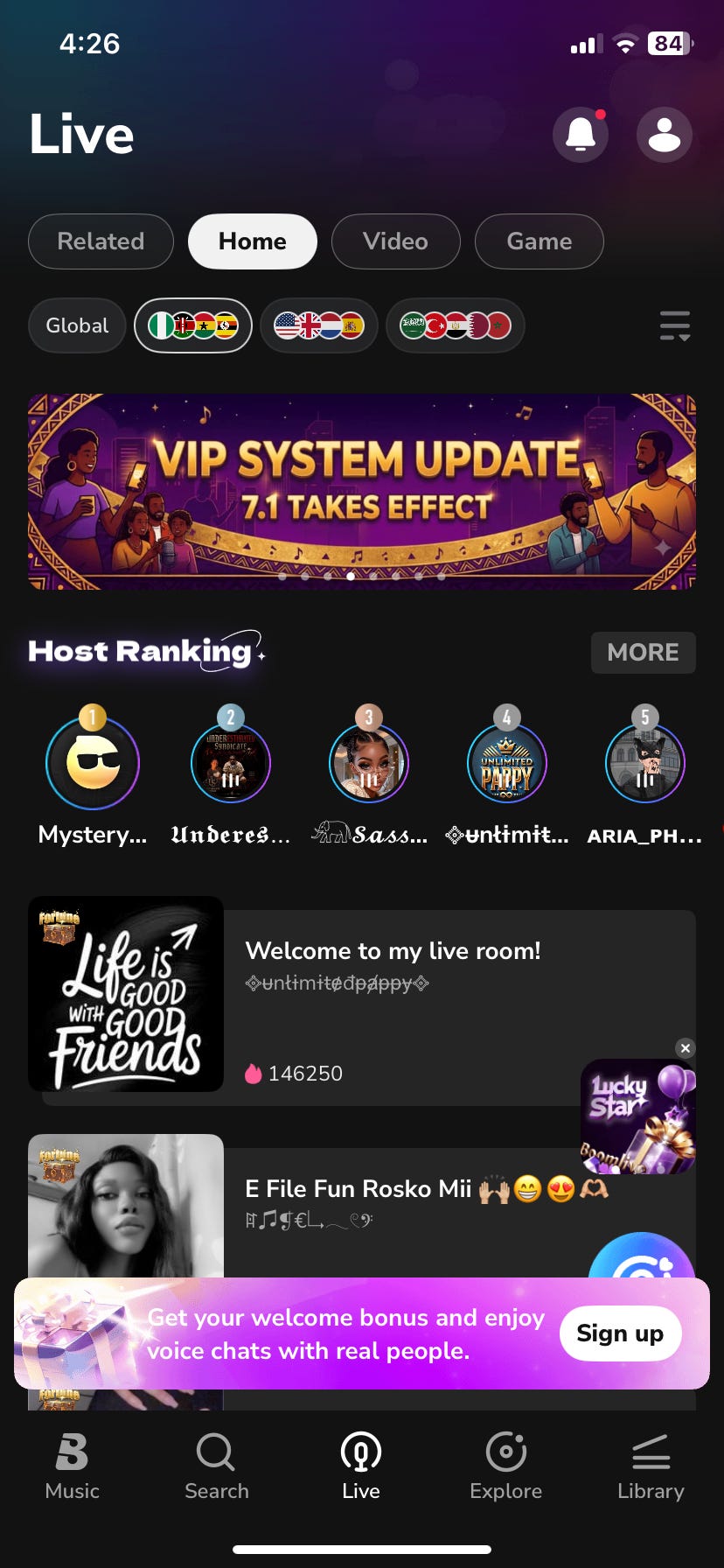
Engagement tactic on the Boomplay App: Livestreaming content from creators and ranking of hosts.
Concerts, advances, TV commercials, phones as prizes. It sounds like you had an endless war chest. Did you ever have to fight for resources?
I was laughing in my mind when you asked. Marketing budget was about $2 million for the year.
And did it return money? Yes, we made money. We had subscribers, and money came in from more than one side. There were ads on the free tier, and we were actively pushing to get brands onto the ad platform. I worked on that ad monetization side with the guy who’s now GM, he came from an adtech platform. There was also a larger ad network owned by the parent company, so inventory got filled from the source too, not just our direct sales.
My first year, it was around $1.5 million, and I finished it by the third quarter. Had to request an extra $300,000 to $400,000.
But there was a plan behind it. OKRs every quarter, a grand plan for the year, one or two weeks of brainstorming to set it. And the culture, this is a Transsion thing, was that you have to spend the money. You don’t have an excuse not to. You have to explain why you’ve not hit your results.
Approvals were layered. Below a threshold, I just spend, no approval. Above it, a request goes through an internal tool to the GM, then CEO, then finance. A week, max. But that freedom is earned. With trust, you build trust. You don’t wake up one day and boom. The first one works. The second one works. By the third, they don’t really question. You come back again with results, and then the conversation is only ever, is this worth the while?
It was a startup inside a big organisation. There was Freedom to fail, no punishment for failing, because there was no playbook for the market. The real pushbacks were artist partnerships, and there was a process to those. For every activation, you’d come with three, four, five artist proposals. The numbers, what the returns would look like, and how you’d activate. And people would kill deals for reasons that had nothing to do with reach. For example, someone says, this artist has bad behaviour. You won’t be able to manage that relationship and get the results you want.
We’re two hours in on a Saturday morning when I ask him to bring it home. Of everything, what stood out, and how does it connect to the book?
He goes back to mathematics, his first degree. Velocity is speed in a direction: move fast, fail, learn, keep going. Momentum is mass times velocity: every user and every data point adds mass, and a 100kg truck is harder to push off the road than a 10kg car. Distribution isn’t just a channel.
“Distribution could even be trust. If people know you keep your promise, they tell other people. That’s distribution,” he says.
And growth is never one department. He watched Boomplay build its global support function out of Nigeria, and he talks about it as growth infrastructure, not overhead. A two-man support team in fintech with a million customers will undo any campaign.
“If it takes management three months to make one decision, someone who moves madly has already made it, moved ahead, and thought about the next six months.”
Then, almost as an aside, he sets up the next conversation. At Alerzo, a B2B platform digitalizing informal retailers with over $20M in VC-backing, he states that his budget line for marketing was zero.
“On paper, I ran on zero marketing budget. We had to figure out how to get the money.”
That’ll be our next conversation.
Thanks for bringing us a fascinating peep into top-level sales hacks—and the driver behind them.
I absolutely loved reading this, thank you so much!