
In November 2025, at the start of the new NNL season, Sporting Lagos, a professional football club founded by Shola Akinlade, did something they’d never done before. They called the fans who’d stopped coming. I got a call too. Twice.
This wasn’t the regular newsletter editions or social posts. Phone calls. Asking why they’d left. Telling them the club wanted them back. Sending tickets.
Sporting Lagos had been relegated from the NPFL to the Nigeria National League in June 2024. In the season that followed, David Odunlami — Head of Brand and Story at the club — let how he felt about it shape how the club communicated. He’s candid about this now. They went quiet. The energy dropped. The atmosphere that had made Sporting Lagos games feel like something worth attending, that had drawn people who didn’t even follow football, had gone flat.
The season after that, he changed course. And what the club was calling people back to wasn’t just football. It was something David had spent four seasons building from the ground up — a 10,000-subscriber newsletter with decent open rates, fan groups who invented their own chants at 2 am, an atmosphere the players themselves say changed what happened on the pitch. A community that, when it was working, made people buy tickets for strangers at the final game just to make sure the road trip buses were full.
Sporting Lagos won promotion back to the NPFL in April 2026 with new players, a new coach, and a community that showed up again.
The World Cup starts today. There’s no better moment to ask David what four seasons of building a football club in Lagos has taught him.
Editor’s Note: The conversation below is edited for length and clarity.
You came into a club that had already made some decisions about how it wanted to grow. What did you inherit?
The club was always clear that it wanted to be a community project. The people who built it from scratch resisted the instinct to immediately hire a full marketing team or bring in agencies. They did the first layer of work themselves. In the first season, we had one social media manager who also did design. There’s this funny story of how Shola designed the club’s first logo on Canva, before the rebrand. But the point was that they were learning about the kind of people they were actually trying to reach.
By the time I joined for the second season, there was already a newsletter with close to a thousand subscribers, highly engaged. A social media presence that fans actually wanted to interact with. The Happy Corner [supporter’s group] had started on its own. The club spotted a group of fans making noise and drinking beer at the first few matches, reached out, and helped them form into a proper supporter group. That’s all before I was there.
So I inherited a really great foundation. What I had to do was understand the club deeply enough to know what to do with it.
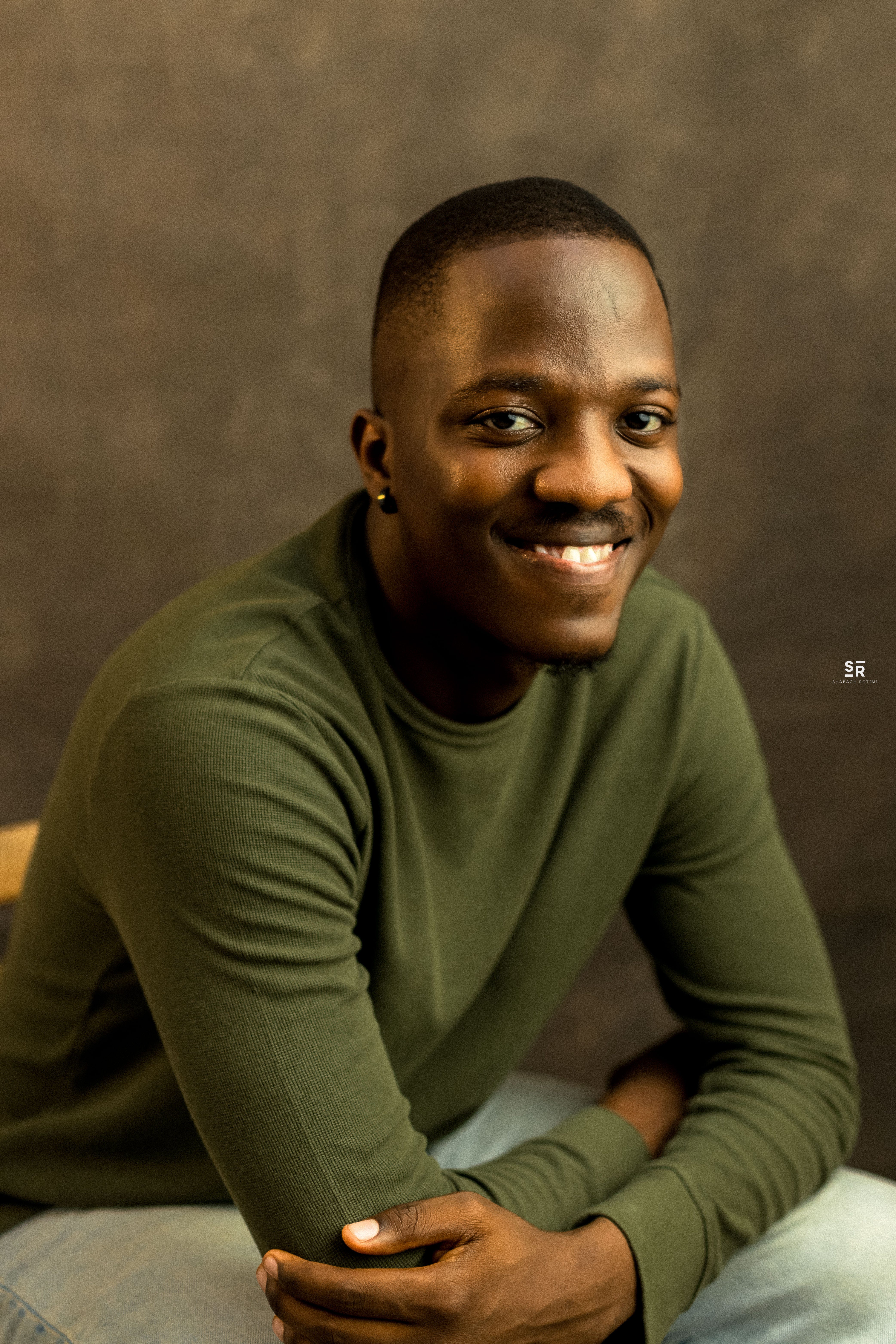
David Odunlami
Let’s take a step back. What led to your joining the club?
Before the club was even announced publicly, someone from the club reached out about writing player profiles. They wanted to tell the personal stories of the players before the first game. Who these people were, what it actually felt like to be a footballer in Nigeria, why anyone should care about them.
I wrote those “Players Tribune-like” pieces. Before I was staff. Before I was even really a fan. And I think that doing that work shaped how I ended up thinking about the job, because the answer to “why should anyone care about these players?” turned out to be the same answer as “why should anyone care about this club?”
A year later, Shola Akinlade, the club’s founder and owner, reached out. I went through the normal interview process and got the job.
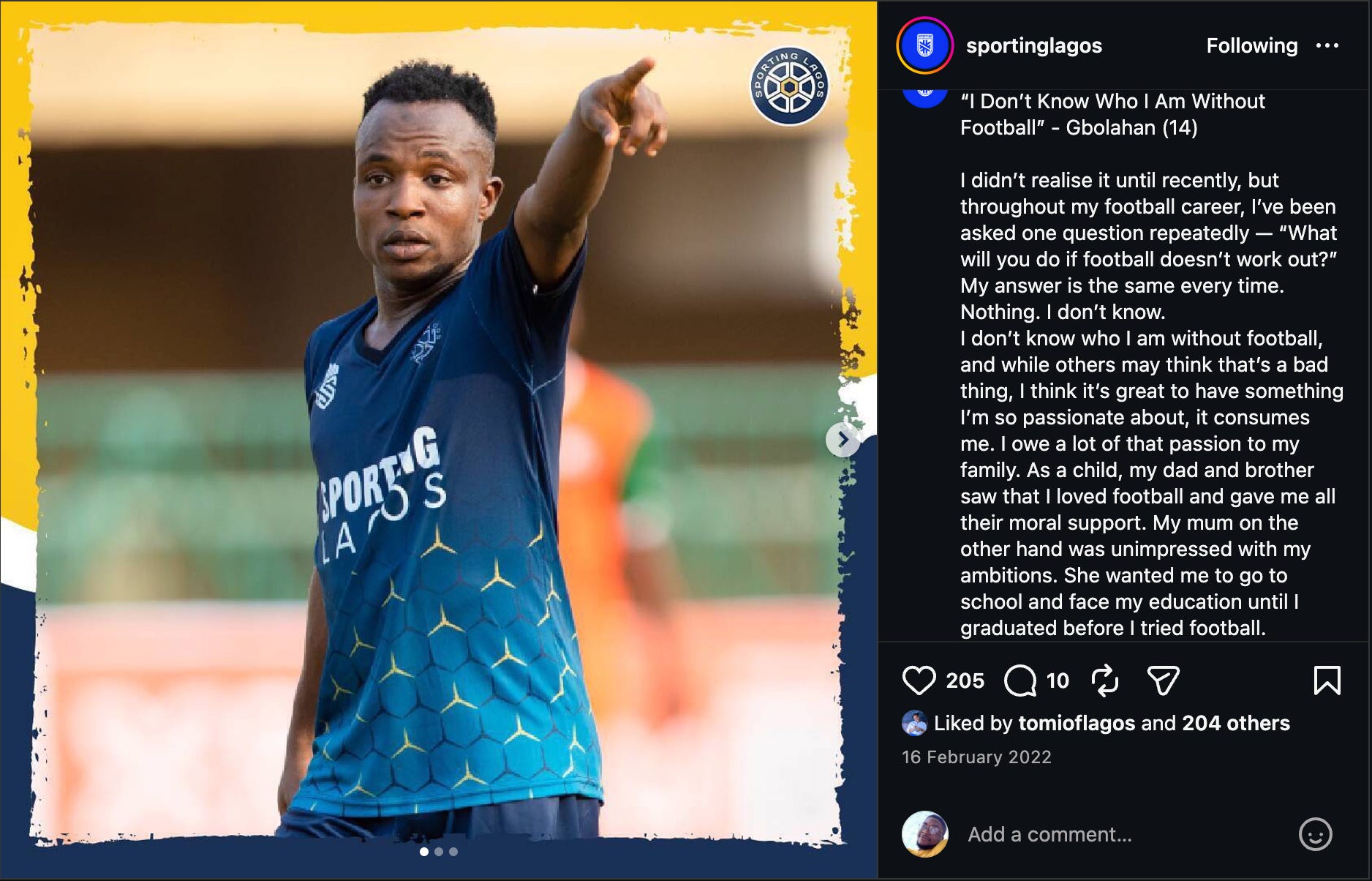
One of the many player profiles David wrote in 2022. Longer pieces can be found on the Sportling Lagos Medium Account.
Ahan! So it was you who did those pieces. They were really good. You maintained the playbook you met. No big agency. No major paid campaigns. Why?
I came from a background where I’d seen what stories could do when they actually connected. There’s a series [Naira Life] at Zikoko I’d worked on about how people relate with money in their everyday life. I’ve seen how when a subject in one of those pieces needed a job or money, readers would pull together and find a way to support. That happens when people feel like they know someone.
I’ve also supported Arsenal all my life. And Arsenal, whatever you think of them, is one of the best storytelling clubs in football. I’ve never seen an Arsenal player face-to-face. But I’ve cried when they lost games. Because they made me feel like I could connect to those people. That’s the strategy we needed to bring into Nigerian football.
When I thought about Sporting Lagos, I kept coming back to one question: why should a country where every child grows up playing football on the street, where the talent pool is enormous, produce less football connection than countries a fraction of the size? Nigeria has the people. Nigeria has the passion. What was missing was a club that made those people feel seen.
That was the pitch. Not “let’s grow the fanbase.” It was: here are people trying to achieve something. Let’s make sure other people can see themselves in that.

So how much of what happened next was designed, and how much just grew?
The Happy Corner was almost entirely organic. The club spotted a group of fans early on and helped them organise, but the identity, the chants, all of that they created themselves. There’s a WhatsApp group where fans send voice notes at 2 am debating whether a new chant has the right tone. They vote. They test it at the next game.
Other fan groups started emerging too. The Blue Waves, the ultrás and others. People creating their own identities within the broader fanbase. At some point, we started engaging with them more directly, finding out what they needed, giving out tickets and jerseys. But we were following them, not leading.
What we did was engineer the experience around the game. Safe environment. Clear standards of behaviour. The stadium has to feel like somewhere people can bring their families. That’s not organic. You have to be deliberate about it.
You joined mid-build. New logo, new jersey, new sponsor, new website, all landing at once. What did the first 90 days actually look like?
I met a good structure on ground, but honestly, I had to figure things out by doing them. The first two to three weeks, I was the social media manager. I was the designer. I even made some videos. We didn’t have the full team yet so I just got in and started working.
Beyond that, I had a long list of things to do. Here’s what it looks like. Get familiar with the new head coach and players. Understand the Nigeria football system. Attend games, attend training sessions, speak with everyone around the club. Build the team. Plan for the season. Announce the academy, the new coach, the new logo, the new jersey, the new sponsor. Launch the website. Build an engagements calendar for the quarter. Organise the file systems.
On paper, it looked structured. The reality was much more turbulent than that.
What I tried not to do was make myself the face of the connection. I wasn’t trying to build my own relationship with fans yet. The goal was to make sure the club stayed connected — through information, through personality, through consistency. Let the club do the work.
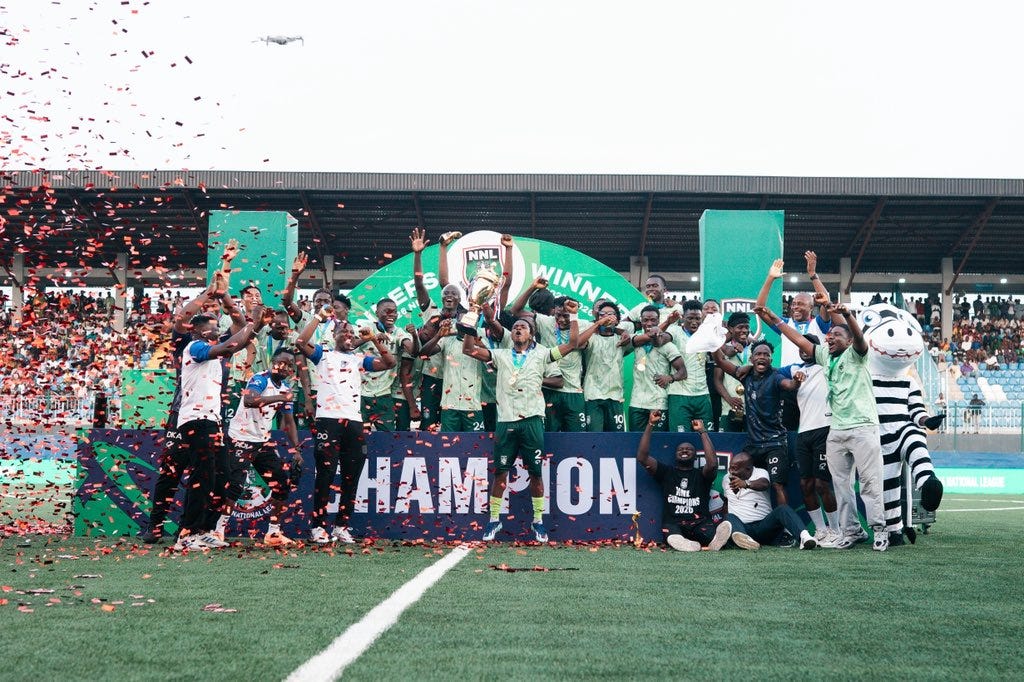
Sporting Lagos crowned champions of 2025/2026 NNL season | Credit: Sporting Lagos
You took over the newsletter from Ekene Agu and made it the thing fans actually trust. How?
When I met Ekene, the person who’d been writing it before me, I was surprised she was a woman. I’d assumed from the Sporting Lagos email address that it was a man, because of the name. She says she gets that a lot. I read everything she’d written before I sent my first one. She edited my first few editions. There was a point where I was always waiting for her notes before I felt like it was ready.
That shift matters because the newsletter became its own thing. Not just match updates. People treat it like their source of truth about the club.
I’ve had fans message me to say they didn’t get a piece of news because it wasn’t in the newsletter, even though we’d posted it everywhere. That tells you what people actually trust.
The replies are the part I think about most. I’ve had someone messaging me to say they’re sorry they can’t make the next game, they’ll try to be present for the one after. This is someone I’ve never heard of, who I had no idea was even following us.
Mini-documentary: Earliest Sporting fans share their experiences with the club
Yeah, I also thought Ekene was a guy at first.
The club got relegated. What did that do to the fanbase, and what did you do about it?
This is something I’ve spoken about openly. We went quiet in ways I’m not proud of. I let how I felt bleed into how the club communicated. We pulled back on the game-day energy, the fun engagement, the things that had made attending feel worth it. We told ourselves it made sense. We’d just been relegated. What was there to celebrate?
Attendance dropped. The intensity of fandom fell off. It wasn’t dramatic, but you could feel it. People stopped coming in the same numbers. The lesson from that season was simple. Life didn’t stop at relegation. We were still building a multi-generational football club.
So at the beginning of this season, we shook things up. We decided to wake everyone up. We started calling those people who stopped coming and asking why they hadn’t come. We told them we wanted them back and gave out tickets. Some people said they’d left because we got relegated, but they loved the calls and said they’d come back. Many of them did.
We also changed what the stadium actually felt like on match day. More halftime programming. More props: things that made the identity of the club visible when you walked in. A special matchday experience for our biggest female fans on International Women’s Day. The goal was to make every game feel like something was happening beyond ninety minutes of football.
We ran watch parties too: started with Liverpool vs Manchester United, did an AFCON watch party, showed up at events where we knew our community would be even when Sporting Lagos wasn’t the headline. We partnered with brands like Smiley Socks, Fired & Ice, and Quacktails. We did road trips. Hundreds showed up.
The first-ever player awards night was at Fired & Ice, players, fans, coaches and everyone in the same room. It was so much fun. At our recent town hall we announced Coach Jeff to our community before it went public. So fans heard it before anyone else did. We made physical things too. Pins that said I was there for the Abeokuta road trip. Pamphlets. Stickers. Things people will find in ten years and say, “yeah, that was a good time.”


We found new communities. We went to secondary schools in Onikan [Lagos], told them to bring their kids to games. We didn’t pay anyone. They came, loved it, kept coming. University students show up consistently; we send buses when we can. We’re also collaborating with other clubs in Lagos.
By the end of this season, fans who couldn’t attend the final match because it was a weekday were calling us to buy bus tickets for other fans who were able to make the road trip. That had never happened before. These people wanted to make sure the stadium was full even when they couldn’t be in it.
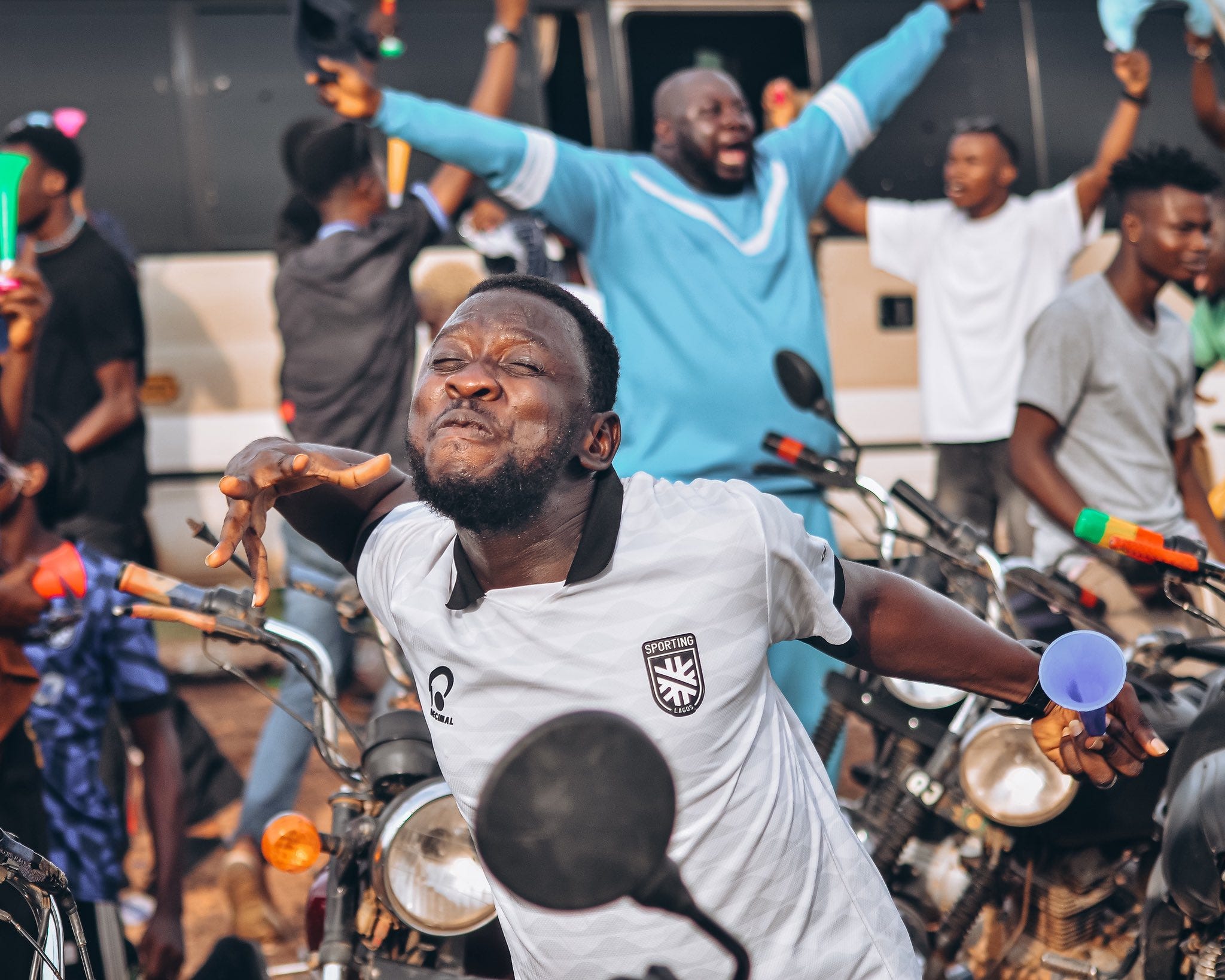
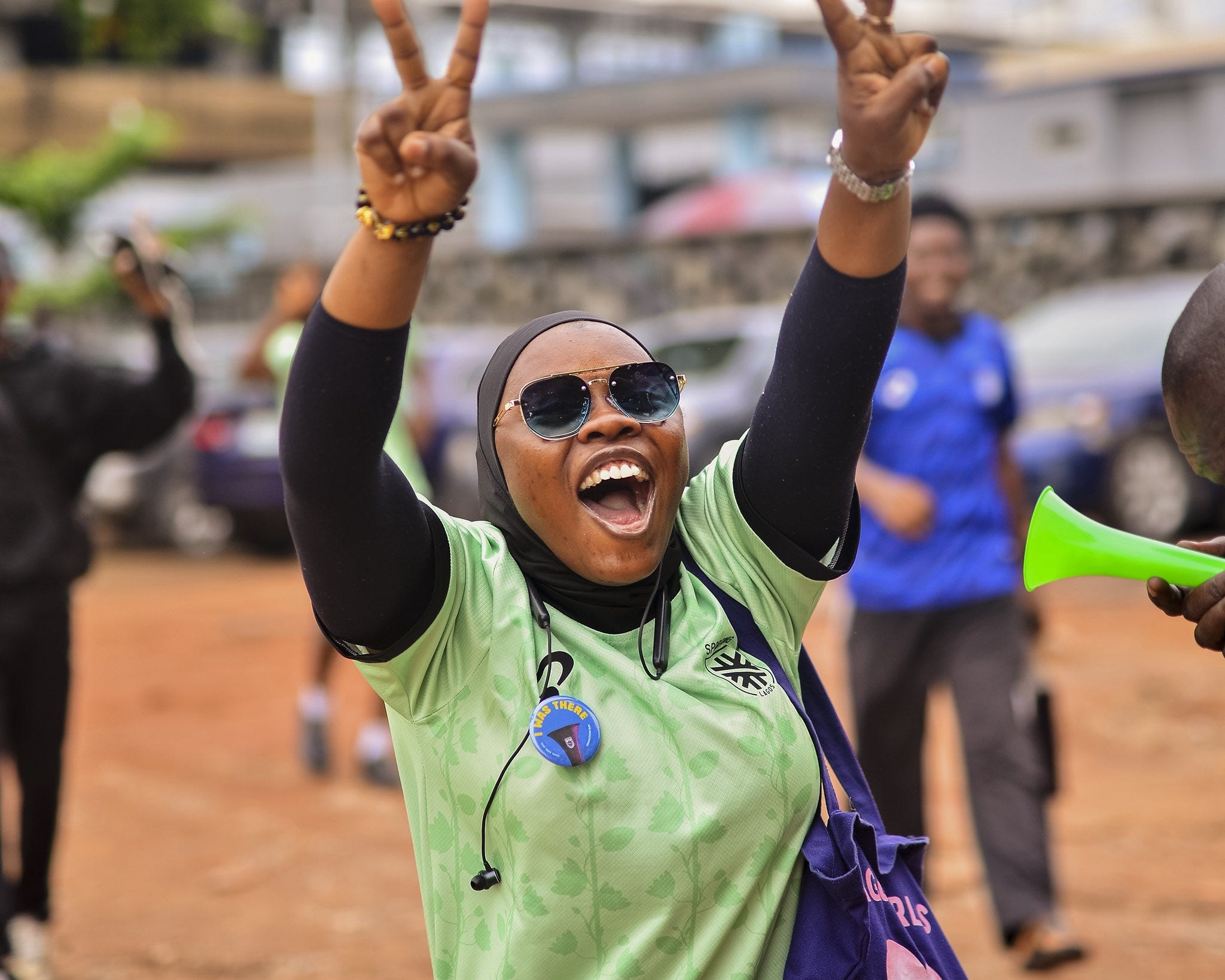
Last game in NNL 2025/2026 season, Sporting Lagos fans celebrating after the 1-0 win over Osun United in Osun state | Credit: Sporting Lagos
You said this season’s atmosphere was probably the best you’ve had. The club also won promotion. Do you think those two things are connected?
Yes, they are. When the stadium has good energy with the fans loud, present and invested, it changes what happens on the pitch. I’ve watched it happen. For example, the fans we took to Osun state on the final day of the season had to cheer from outside the stadium because the hosts didn’t let them in due to corruption. But having them cheering from outside the stadium made the players fight for the win. These were working-class people who took a 5-hour trip on a Thursday to go watch a game in Osun. I don’t see many fans from other clubs doing that.
Whether the atmosphere caused the promotion or the promotion caused the atmosphere, I’m not sure you can fully separate them. What I do know is that we made a decision to treat the community as the product, not just the audience, even when the football was hard to watch. And by the end, those people wanted to own it. They were buying tickets for strangers.