
In the seven months Aida Mwaniki spent as general manager of Power Resources International, a new industrial manufacturing project in Kigali, she secured the approvals that brought it significant tax savings under Rwanda’s Manufacture and Build to Recover Programme. The market was not the hard part. The rules were.
Other investors started asking how she did it. Before she left the job, she had set up WB Business Consultants to answer them. Now it has her full attention.
She joined our call from her home in Kigali in a black top under a bright patterned wrap, pink clear-framed glasses, a red headband and a pair of black headphones, with another meeting waiting on the other side of the hour. My day looked the same. Halfway through, the line dropped, and we picked up as if nothing had happened.
Consulting is familiar ground for her. She went into it once before, after a decade at Citi, the American bank worth $205 billion. Development finance came next: PEPFAR, the US government’s HIV/AIDS relief programme, then One Acre Fund, which finances seed and fertiliser for smallholder farmers and where she ran business operations across eight countries, then Sun King, one of the world’s largest off-grid solar companies, where she led its pay-as-you-go programmes across more than 12 countries. She kept a consulting practice going through all of it.
“Having that entrepreneurial outlet has always been important to me,” she said. Not mainly for the money, though it has to be both.
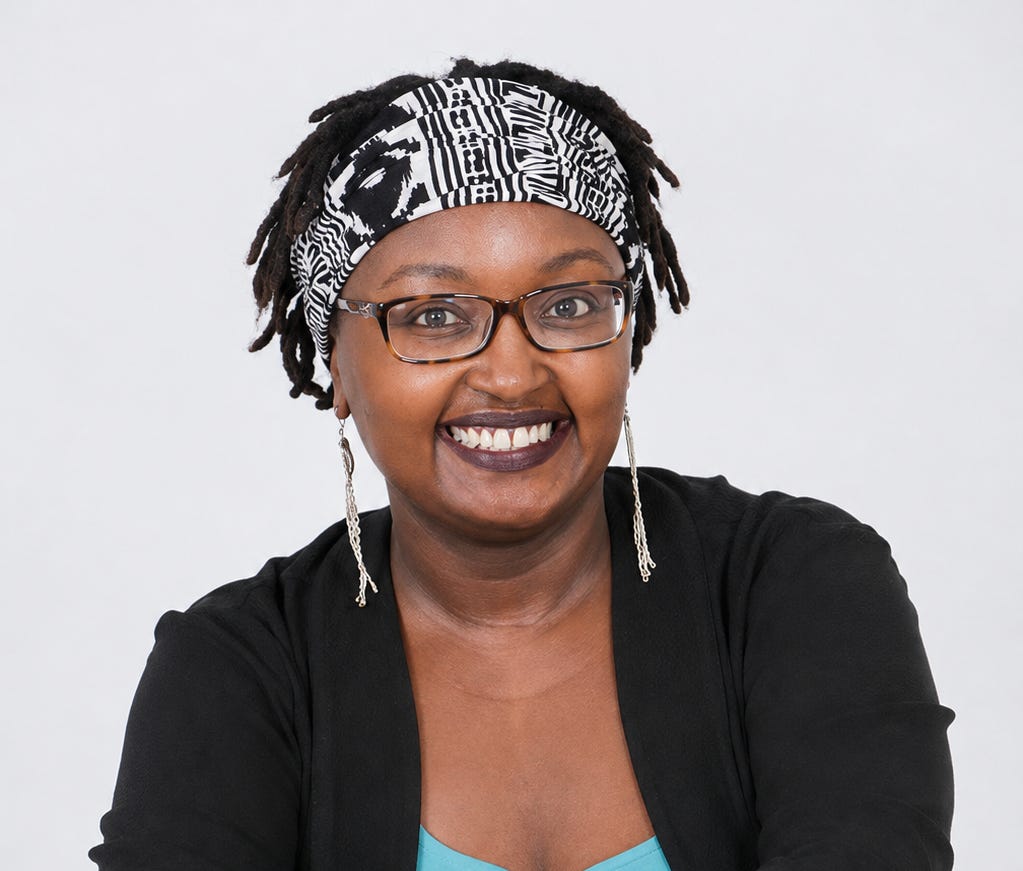
This conversation covers what she learned getting a new factory through Rwanda’s incentive rules, how she diagnoses a business that calls her for help, and how pay-as-you-go solar gets people with no credit history to pay. It has been edited for clarity and length.
You ran a new manufacturing project in Kigali before starting your firm. What did it teach you about entering Rwanda?
That was an experience I had working as a General Manager for a company that just started in Rwanda. There was so much regulatory and corporate governance that needed to be understood, and this particular company needed tax concessions under the Manufacture and Build to Recover Programme. The qualification process included providing evidence of existence and submitting a detailed proposal of the business plan and its impact on the economy.
The secret to success in such applications is simple. Follow the rules, make the right connections and ask questions all through the process. If you do all that properly, humbly and respectfully, you can take advantage of the concessions they give to investors in this country.
How did that turn into WB Business Consultants?
I got a number of questions after I shared my experience running that company, and that became the genesis. I started thinking maybe there are other people who want to come in and invest in this country and would need guidance, and could draw on my experience of how you start a business here, or anywhere in Africa, for all intents and purposes.
It’s always something I’ve done on the side, even when I’ve been employed. It keeps my mind busy and engaged in things that interest me. Because sometimes when you work for an organization, you’re limited to what you’ve been hired for.
When a company brings you in, what are you looking for first?
I prefer to spend a lot of time listening and observing, because sometimes they think they need help in one area when actually it might be in something else. In some cases there’s a problem to fix, and in others it’s an idea or concept to be refined. Diagnosing that needs patience, time, listening and observing.
Then I step back and look for the root cause. If there’s anything I have seen on multiple occasions, it’s a lack of confidence that the founders or the team have in their ability to execute something they don’t have expertise in. Whenever you’re new to something and don’t know how to navigate it, that’s when people ask for help, which is very healthy.
So one of the things I like to do is highlight what they’ve already achieved. In many cases, they would have actually done a lot, and the next step was just to enhance certain aspects of their plan. Being a founder is sometimes very lonely, and entrepreneurs sometimes second-guess themselves. Going in and saying, “you’re wrong, you’re wrong,” I don’t think that gives people confidence.
Most of them already have the answers. That’s what I tell them. All they need to do is develop it, articulate it, and make a plan around it.
Tell me about an engagement where your diagnosis changed the outcome.
One engagement I had was with a recruitment company that needed to increase the number of clients it was serving, which would increase its revenue. The sales team was one senior recruiter leading a team of four, and the CEO was quite involved in day-to-day management.
What I diagnosed was that they were not managing their sales funnel using tried and tested methodology. Following up on leads, converting interest into a warm lead, then a hot lead, then a sale, needed to be structured into a process. All the information was sitting with the individual recruiters. The first step we took was to consolidate all the leads into one shared sheet. Next, we highlighted those actively being worked on and made them visible on a board updated every week during the staff meeting. That brought in accountability and some healthy competition, and every recruiter could see the status of the whole portfolio. Because what you don’t measure, you cannot manage.
One of the things that improved was the turnaround time from a lead to a completed recruitment. Instead of spending several weeks following up on a lead whenever they thought they needed to, they could condense that into a number of days, and measure when to drop a lead because it’s no longer hot, or how much more time to give it. It becomes a system. One of the things I would say was, “When somebody has said come back to me in two weeks, you make sure you go back in two weeks. Don’t wait for them to come back to look for you.” That created a consistency that was lacking.
If I can estimate, I would say it was moving from months to weeks.

That sounds like common sense. Why weren’t they doing it already?
I think it was a combination of lack of the knowledge and being able to apply it, as well as an unwillingness to make something into a system, so that there’s accountability built in.
As human beings, a lot of us don’t like to be held accountable. It’s a natural thing. You want to say, but I’m doing this, I’m doing that. Having a system around a process makes sure people are actually doing what they’re supposed to do. You have to be willing to build that into your business rather than let things work out randomly.
You also lead change projects. Why can’t a founder just announce a change and make it stick?
It’s very hard to install a new behavior or culture when people have gotten used to doing things one way.
The most successful changes are led from the top. The leaders in the organization need to explain why the change is happening, with clear reasons behind it. Change works best when leadership requested it and will take the time to drive it.
So when taking on a project that needs a lot of change, it’s important to make sure the client is very, very clear about why they want it. Once that is established, it becomes easier to give advice on the how. But the why has to really be internally generated.
You’ve moved between banking, public health funding, agriculture and solar. What connects them?
All through my career, I’ve had what you might call a golden thread related to finance, which is what I studied in university. Banking gave me such a good broad-based foundation in how banking systems work, particularly corporate banking, because Citi offered only corporate services in Africa. I trained as a management associate, as it was called then, went through all the different departments, and ended up working for the Africa Head of Operations and Technology.
So even if it came from a banking lens, I still got to understand what CEOs and founders were trying to achieve, and would plug in at the point where they had a request to the bank.
When I left banking, I wanted more experience in development finance, which brought the impact and social benefit lens. I worked as a consultant on PEPFAR, which was public health. I worked on a consultancy basis for an education company, transferring knowledge. Then One Acre Fund, where we were working for farmers. And with Sun King, we were bringing clean, affordable and reliable energy to people who may not have had access.
So most of my work in the last decade has been to balance what is good for the organization and what is good for the beneficiary. Who may be a farmer. Who might be just someone in their house who needs two lights so their kids can do their homework. Or someone who works in a market and wants to work extra hours at night and earn more money that way.
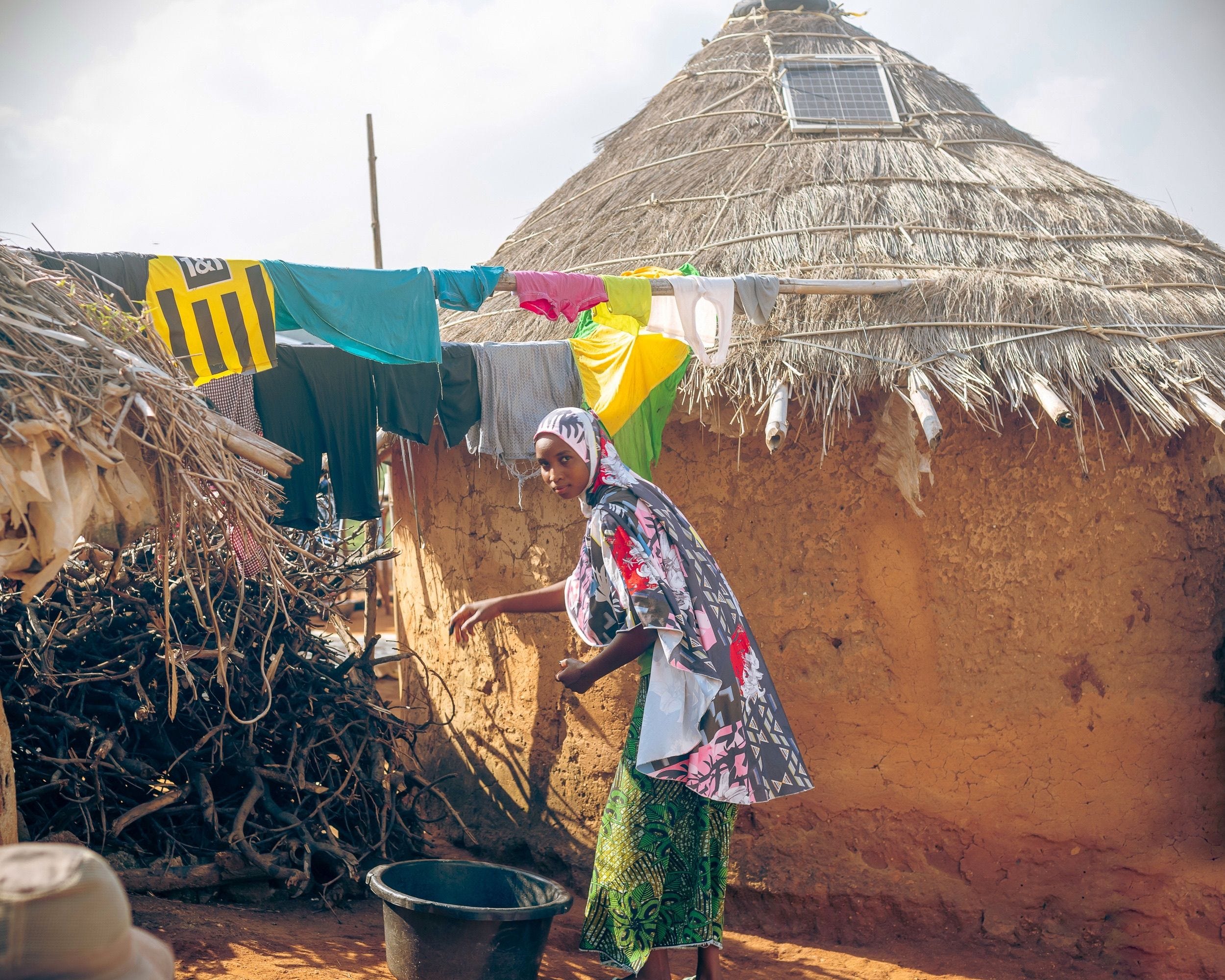
You’re now developing solar projects through your own firm. Panels have become far cheaper. Is financing still what keeps people off the grid?
Yes and no. I think the situation is a bit more complex than just financing.
One of the greatest things that has happened is that the cost of photovoltaic solar panels has come down greatly. Companies have started creating products that are easy to access, like lamps with a small solar panel embedded in the lamp itself, which makes solar far more affordable.
There might still be some issues of affordability, which is why there is this huge push from Mission 300, an initiative by the World Bank, the African Development Bank and other stakeholders to bring energy access to 300 million people in Africa. So there’s awareness, support, funding, and interesting solutions being built. Because sometimes it’s not even about whether somebody can afford it. It’s how to get it to them. Last-mile delivery is an issue in Africa and Asia. And some African governments don’t fully understand just how beneficial solar can be.
A lot of countries and funders have come up with results-based financing programmes. Those with the least ability to pay buy the product at a discount, subsidised by the World Bank, the government or the African Development Bank. As long as private sector players can show they sold to an individual meeting certain criteria, they get back a portion of their costs.
On top of it all, there’s PAYG, where customers pay a little every day or week for their solar. Once they finish paying, they own the product and the energy is free, which is brilliant.
Pay-as-you-go solar is really credit for people who have never had formal credit. How do you design a programme like that?
This is very closely related to the challenges microfinance organizations have faced. When you design your pay-as-you-go model, you build into the cost what your loss ratio could be when people just don’t pay, whatever the situation may be. There’s a whole science behind that. But the first and best line of defence is a good assessment of whether the customer has the ability to pay.
With a lot of pay-as-you-go models, we rely on field agents who sell to people within their community. They understand this person and their habits, and whether they look like they can pay. It’s another strategy microfinance institutions used a lot, that you only recommend somebody you know. That brings accountability, as nobody wants a reputation as a poor payer.
In countries where there’s a low understanding that this is actually a loan, a lot more customer education goes in, so people don’t sign something they don’t understand. That’s also customer protection. For people who may not have the ability to pay, maybe you recommend they save their money and come and buy it cash. But that needs a field agent who is savvy and has the right attitude towards building a good portfolio.
Not every solar company wants to carry that risk. What are the alternatives?
Different companies take different strategies. Some decide to take on the credit risk and structure a pay-as-you-go programme. Others say, we don’t want that risk, we’re only going to do cash. They can sell their products through a bank or another organization on a cash basis, especially for high-value items.
What advice do you give anyone building a business?
Some of the best advice I ever got was that when you start your company, build it to work. Have processes and systems. Think about what makes it all workable for someone else, so they can follow the steps and do exactly this.
And be very clear about your goals and why you are doing it. If sustainability is important to you, build for it. Some people’s expertise is building businesses to sell, and that’s a different set of goals. So be clear about your objective and create the business that will meet it.
And if things change, please recognize that change and adapt. Don’t get stuck doing things one way, because you might miss trends, and you’re going in one direction when everything should be changing and flexing.
Know your objectives, and then be flexible.